


Kenya’s economy is growing, with a 4.8% GDP growth forecast for 2026. The country has a young, English-speaking workforce and a strong tech ecosystem.
Its time zone is convenient for both European and Middle Eastern businesses. Many companies looking to build teams in Africa or establish a presence in Sub-Saharan Africa consider Nairobi as their first stop.
Foreign companies are increasingly interested in Kenya, but many do not fully understand local compliance requirements.
Most foreign companies come to Kenya with good intentions and use contract templates from other countries. Within a few months, some face KRA penalties, labor tribunal notices, or employees who realize their ‘contractor’ status is not valid under Kenyan law.
Why Deel works for African startups scaling globally
These issues rarely happen because companies are careless. Instead, they often occur because Kenya’s employment laws have changed a lot since 2023, and much of the information online is outdated.
This guide covers what actually matters: the legal foundation, the payroll stack, contractor risk, the entity-versus-EOR question, benefits expectations, and why Kenya’s compliance environment has knock-on effects across the wider East African region.
Kenya’s Employment Act: What foreign employers need to know
The Employment Act 2007 is the backbone of Kenya’s employment framework.
It sets out what must be in every employment contract, what notice periods look like, how termination works, what leave entitlements apply, and what happens when an employer gets it wrong.
A few things the Act mandates that foreign employers consistently miss:
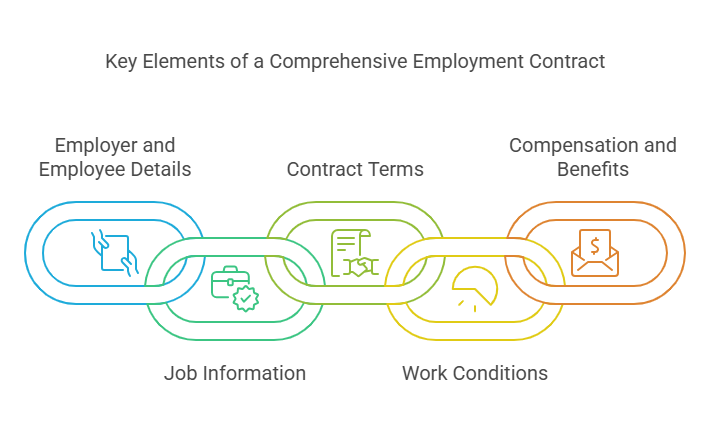
Every employee who works for 13 weeks or more must have a written contract.
Verbal agreements and informal arrangements do not satisfy this requirement and expose parties to the labour tribunal.
The contract must specify the job description, remuneration, working hours, and the conditions under which employment can be terminated.
Termination requires fair process. Kenyan law does not allow employers to terminate employment without a fair process.
The law requires informing the employee of the reason for termination, giving them an opportunity to respond, and following due process. Skipping these steps can lead to expensive legal claims for unfair dismissal at the Employment and Labour Relations Court.
Severance applies specifically to redundancy situations. When a role is eliminated rather than an individual being dismissed for cause, the employer owes 15 days’ pay for every year of service.
Many foreign employers conflate redundancy with dismissal and get this wrong in both directions.
How Deel is helping startup founders secure visas to build globally
As of May 2025, any employer with 20 or more employees must reserve at least 5% of roles for persons with disabilities. This applies to both private and public sector organizations, and compliance comes with potential tax incentives on the other side.
Understanding Kenya’s payroll requirements: PAYE, SHIF, NSSF, and the Housing Levy

Kenya’s statutory payroll deductions have changed more in the last three years than in the previous decade. Companies that set up payroll in 2021 or 2022 and haven’t revisited it since are likely non-compliant today.
Here’s what you’re required to deduct and remit as of 2026, with everything due by the 9th of the following month:
PAYE (Pay As You Earn)
Kenya uses a progressive income tax system administered through KRA’s iTax portal. PAYE applies to all employment income, including salaries, wages, bonuses, allowances, and non-cash benefits like housing or car allowances.
Employees receive a personal relief of KSh 2,400 per month against their tax payable.
The employer registers on iTax, deducts the correct amount each payroll cycle, and remits monthly. Missing the 9th deadline triggers penalties.
NSSF (National Social Security Fund)
NSSF contributions have been restructured under a tiered system that has been rolling out in phases since 2024.
Under Phase 4 rates effective February 2026, both employer and employee contribute up to KSh 6,480 per month each, totaling KSh 12,960 per employee monthly.
Late remittance attracts a 5% penalty plus 1% monthly interest on the unpaid amount.
All employees must be registered, including casuals and interns on a contract of service. There are no blanket exemptions for expatriates unless covered by a bilateral agreement.
SHIF (Social Health Insurance Fund)
NHIF was replaced by the Social Health Insurance Fund under the Social Health Insurance Act 2023. The Social Health Authority began operations in October 2024.
Employees contribute 2.75% of gross monthly salary to SHIF, and employers are required to deduct this and remit it to SHA monthly.
The transition from NHIF to SHIF caught many employers mid-cycle, and some are still running on outdated rates.
AHL (Affordable Housing Levy)
This is the one that blindsided the most companies. The Kenya Revenue Authority began collecting the Affordable Housing Levy from July 2023.
It sits at 1.5% of the employee’s gross monthly salary, matched by the employer, for a combined 3% cost per employee per month.
It is declared directly in the monthly PAYE return on iTax under Sheet M, and it applies to base pay, bonuses, allowances, overtime, and non-cash benefits. Late remittance attracts a 3% monthly penalty.
Deel vs Papaya Global: The Best EOR For 2026 Revealed
The combined employer cost of NSSF plus AHL alone adds approximately 10 to 15% on top of salary before you factor in PAYE administration. Companies that have modeled Kenya headcount costs without accounting for this are working from inaccurate numbers.
The contractor trap: why paying Kenyan talent as freelancers is a liability, not a workaround
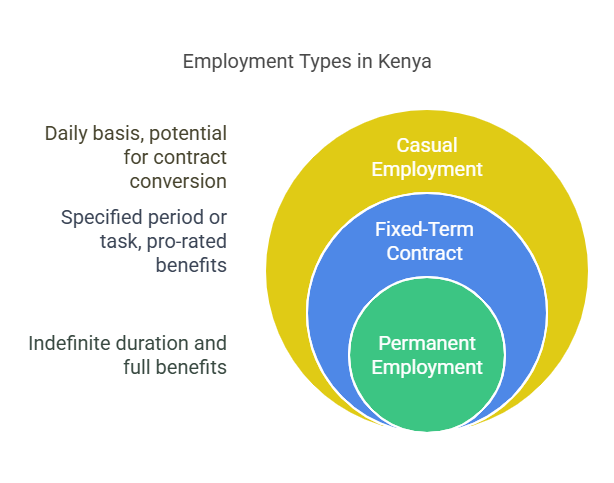
Misclassifying employees as contractors is a common mistake for foreign companies in Kenya, and it can have serious legal and financial consequences.
The arrangement usually starts with good intentions. A company wants to engage a Nairobi-based professional quickly without setting up a local entity.
They send over a contractor agreement, agree on a monthly rate, and the person starts work. Six months later, that person is working exclusively for the company, using company equipment, taking direction from a company manager, and has no other clients.
Under Kenyan law, that person is an employee. The label on the contract does not change the substance of the relationship.
KRA, the NSSF, and the Employment and Labour Relations Court all look at the actual working arrangement, not the document.
If an individual works exclusively for one company, is directed by that company, uses that company’s equipment, and has no other clients, they are an employee regardless of how the contract is written.
The consequences of misclassification are specific and compounding. KRA can raise a PAYE assessment with a 25% penalty on the unpaid amount. NSSF contribution liabilities attach retroactively.
The individual can file an unfair termination claim if the arrangement ends without following the Employment Act’s due process requirements. Back taxes, penalties, and tribunal costs on a single misclassified hire can run into hundreds of thousands of Kenya shillings, and the liability compounds with time.
Companies that want to hire Kenyan talent quickly without setting up a local entity often use an Employer of Record arrangement, which provides compliant employment from the start.
Setting up an entity in Kenya versus using an Employer of Record: what the numbers actually look like
Companies that want a long-term, significant presence in Kenya should plan for entity setup. Companies that want to hire one to twenty people quickly, test the market, or run a defined project should think twice before defaulting to incorporation.
Registering a foreign company in Kenya involves the Business Registration Service, KRA registration, NSSF enrollment, and SHIF/SHA setup.
The process takes three to six weeks under normal conditions, and that’s before you’ve hired anyone.
You’ll also need a local director, a registered office address, and the ongoing administrative infrastructure to run compliant payroll and file statutory returns monthly.
Using an Employer of Record gets you operational in one to three weeks. The EOR is the legal employer of record.
They handle contracts, payroll processing, statutory contributions, and compliance administration. You manage the work. They manage the paperwork.
EOR fees in Kenya typically run between $300 and $500 per employee per month, depending on the provider and scope of services.
Set against the cost of entity setup, local HR infrastructure, compliance consultancy, and the risk of getting it wrong, the math usually favors EOR for anything under 20 to 25 employees or for companies still validating whether Kenya is the right market for them.
Deel operates through owned entities in Kenya rather than through third-party partners, which matters for compliance quality.
Their localized contracts meet Employment Act requirements, their payroll covers PAYE, NSSF, SHIF, and AHL accurately, and their onboarding workflow handles the statutory registrations that trip up most new market entrants.
What Kenyan employees expect beyond the salary: benefits, leave, and the market norm gap
The Employment Act sets minimum standards. However, expectations in Nairobi’s tech and professional sectors are often higher, especially for senior or specialized roles.
Statutory leave entitlements under the Act include 21 days of annual leave per year for employees who have completed 12 months of continuous employment, sick leave of 7 days on full pay and 7 days on half pay, maternity leave of 3 months on full pay, and paternity leave of 2 weeks on full pay. Public holidays attract a day off and, if the employee is required to work, double their normal rate of pay.
Market norms in the professional sector go further. Medical cover beyond SHIF is standard at companies competing for skilled talent in Nairobi.
Your Global Payroll and Compliance with Deel: The Ultimate HR Solution
Most mid-to-senior professionals expect employer-provided or employer-subsidised private medical insurance covering themselves and their immediate family.
Companies that rely solely on statutory SHIF contributions find themselves at a disadvantage in recruitment conversations.
Other benefits that appear regularly in competitive Nairobi employment packages include airtime or data allowances, transport allowances for roles that require commuting, and performance-linked bonuses.
None of these is legally mandated, but all of them affect whether a candidate accepts your offer over someone else’s.
Understanding the gap between legal requirements and market expectations is essential for retaining employees in Kenya.
Kenya as your East Africa entry point: why getting compliance right here compounds across the region
Kenya sits at the centre of the East African Community, which includes Tanzania, Uganda, Rwanda, Burundi, South Sudan, and the DRC.
For companies with regional ambitions across East Africa, Kenya is almost always the first market, and the operational infrastructure you build here directly affects what’s possible across the region.
Nairobi functions as a regional headquarters city. Most pan-African roles at international companies are based here.
The city has the deepest talent pool in the region for technology, finance, marketing, and professional services.
It has the most developed banking infrastructure for managing cross-border payments. And it has the continent’s best-connected airport for a team that travels.
Companies that get compliance right in Kenya also build the operational muscle to move into adjacent markets more efficiently.
The statutory framework in Kenya shares structural similarities with Uganda and Tanzania, meaning a team that understands Kenyan employment law is better positioned to navigate those markets than one starting from scratch.
Companies that cut corners in Kenya by using contractor arrangements, outdated payroll processes, or informal agreements often repeat these mistakes in other markets, increasing their risk.
Getting it right in Nairobi is worth the effort, and platforms like Deel exist specifically to remove that infrastructure burden without having to build everything from scratch.
How Deel removes the operational ceiling on hiring in Kenya
The practical barrier for most foreign companies expanding into Kenya is not desire. It’s the combination of compliance complexity, payroll administration, and the fear of getting something wrong in a regulatory environment that has changed substantially in the last three years.
Deel addresses that barrier directly.
Through their Employer of Record service, they act as the legal employer for your Kenya-based team, handling locally compliant employment contracts under the Employment Act 2007, processing payroll with accurate PAYE, NSSF, SHIF, and AHL calculations, managing statutory registrations and monthly remittances, and providing in-country compliance support as the regulatory environment continues to evolve.
For companies that want to convert existing contractor arrangements to compliant employment, Deel handles the transition.
For companies entering Kenya for the first time, they get you operational in weeks rather than months, without the entity setup overhead.
Kenya has a strong talent pool, and compliance requirements are detailed and frequently updated. In this environment, having the right support for compliance and infrastructure is important.
If Kenya is on your hiring roadmap for 2026, the earlier you understand the compliance requirements, the more options you have.
Ready to hire in Kenya? Book a demo with Deel today to get started.
Disclosure: This article contains affiliate links. If you sign up through links in this piece, we may earn a commission at no cost to you. We only write about products and services we’ve researched and believe are relevant to our audience.