
Written by Harun Momanyi, CEO of Tranquil Media Group. He has bylines on leading publications worldwide and has been a WordPress user and advocate since 2012.
This article contains affiliate links. I may earn a commission if you sign up through them, at no extra cost to you.
The first time I experienced true luxury was in November 2011 when I attended a leading music event at Sarova Stanley Hotel in Nairobi CBD. The ambience was pristine, and the food was to die for.
I did not have a decent phone at the time, but my desire to create luxury travel content was born. I wanted to travel the world and document it for future reference.
Fast-forward to April 2017, when Park Inn by Radisson launched in Westlands, Nairobi, and I was guest number four. I had checked into the hotel to review the experience first-hand. A world-renowned hotel brand had entrusted me to tell their story.
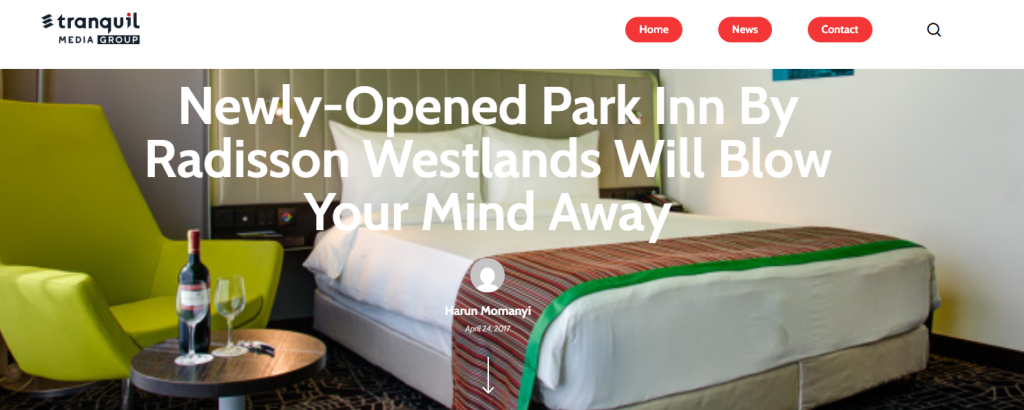
My review of Park Inn by Radisson Westlands Nairobi, which is published on WordPress
I would end up collaborating with Kempinski Nairobi, Uva Wines, Four Points by Sheraton, Crowne Plaza Upper Hill (now called Pullman Nairobi Upper Hill), Blooming Suites in Naivasha, and several others.
One thing is common across all those opportunities: I used my WordPress.com blog to review the hotels and document the experiences.
How did I go about securing such deals? I made sure that I had a decent blog to begin with. With populated lifestyle content. My forte has always been celebrity interviews, but I made sure to highlight how my quality writing could translate into a world-class travel destination article.
Be active on your socials
I also made sure to include my social media reach and other relevant metrics at the time. Brands are big on working with people who are active online, have an existing audience, and will derive value from collaborating with you.
If your social media accounts are dormant, you’re not likely to land a collaborative deal. Usually, brands will offer you complementary access to their property for 24-48 hours or more, depending on the agreement, so that you can give your unbiased opinion about their service.
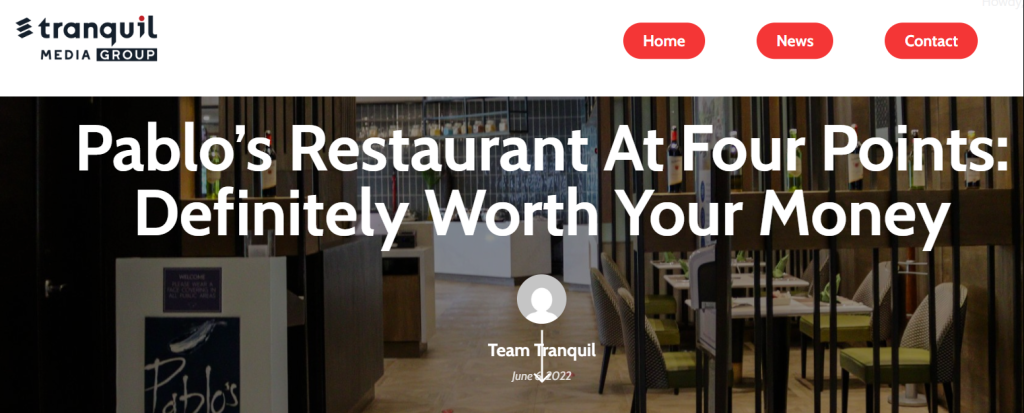
My collaboration with Four Points by Sheraton, also hosted on WordPress
This might include the service, ambience, uniqueness of the location or property itself, some of the perks they offer, and even pricing.
These are the sorts of things that your audience is keen on. With luxury travel, be sure to document the “it factor” of the place you’re reviewing. What does it offer that is rare or exclusive? This also means that we purposely work with true luxury brands.
To market luxury brands, you need to avoid positioning them as cheap or affordable, as they are usually costly due to the heightened experience they offer. So do your research on what is luxury and what isn’t.
If you need a crash course on this, check out the “Inside LVMH” course. This course goes deep into all tenets of luxury, and it will go a long way in helping you become a true luxury travel writer, hence giving you a successful career with your blog.
Finding your niche within luxury travel
Luxury travel is broader than it appears from the outside. You need to decide early on what corner of it you want to own. Are you reviewing five-star hotels in African cities? Are you focused on safari lodges and wilderness experiences? Is your angle business travel at the premium end, the kind of trips executives take when cost isn’t the first conversation? Or is it culinary tourism, where the food and wine experience is as central as the accommodation itself?
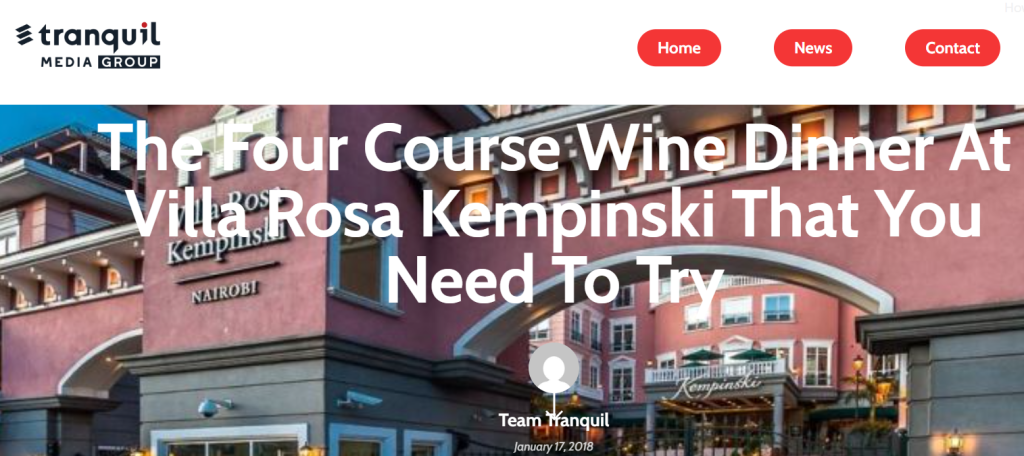
The Kempinski review runs on a website proudly running on WordPress
My work with Kempinski, Park Inn, and Crowne Plaza naturally pulled me toward urban luxury in East Africa. That became my lane by default, and it worked because I knew the market intimately. Editors and brands in that space knew exactly what they were getting when they came to me.
Pick a lane specific enough to be credible and broad enough to sustain a consistent publishing schedule. “Luxury hotels in Africa” is a lane. “Luxury travel” on its own is not.
Setting up your WordPress.com blog
Head to WordPress.com and create your account. Use your actual name as your domain if this is a personal brand play. If you’re building a publication with its own identity, choose a name that signals the niche clearly. Something like “The Nairobi Suite” or “East African Escapes” tells a brand exactly what kind of audience you’ve built before they even read a single post.
Once you’re in, go straight to your plan options. For luxury travel content specifically, I’d skip the free tier entirely. A WordPress.com subdomain signals a hobby, and luxury brands do not work with hobbyists.
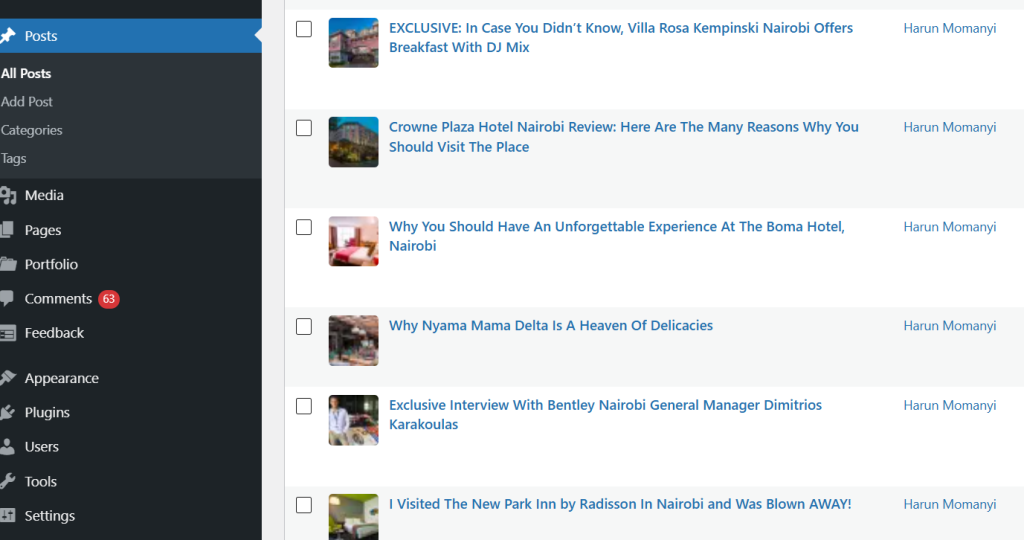
A backend view of my luxury travel content posts on WordPress
Check out the Personal and Premium plans. Personal at $4 a month on annual billing gets you a custom domain and removes WordPress ads from your site, which is the bare minimum for approaching a brand like Kempinski professionally.
Premium at $8 a month adds VideoPress, advanced analytics, and payment buttons, all of which matter once you’re embedding hotel walkthrough videos and tracking which content your audience engages with most.
If you’re building something more ambitious from day one, Business at $25 a month gives you full plugin access, advanced SEO tools, and a staging environment. For a serious luxury travel publication, that’s the plan worth growing into.
Choosing a luxury magazine theme
Your theme is the first thing a brand’s PR team sees when they click your link. It needs to look the part before a single word is read.
In your WordPress dashboard, go to Appearance, then Themes. In the search bar, type “magazine” first, then try “travel” and “luxury” separately. The search results won’t always use the word luxury, but you’re looking for themes that are visually editorial, heavy on full-width imagery, clean typography, and minimal clutter.
Themes worth looking at include Tonal, which handles large photography beautifully, and Gazette, which has a strong editorial structure. Blockbase is worth exploring if you want full control through the Site Editor without touching code.
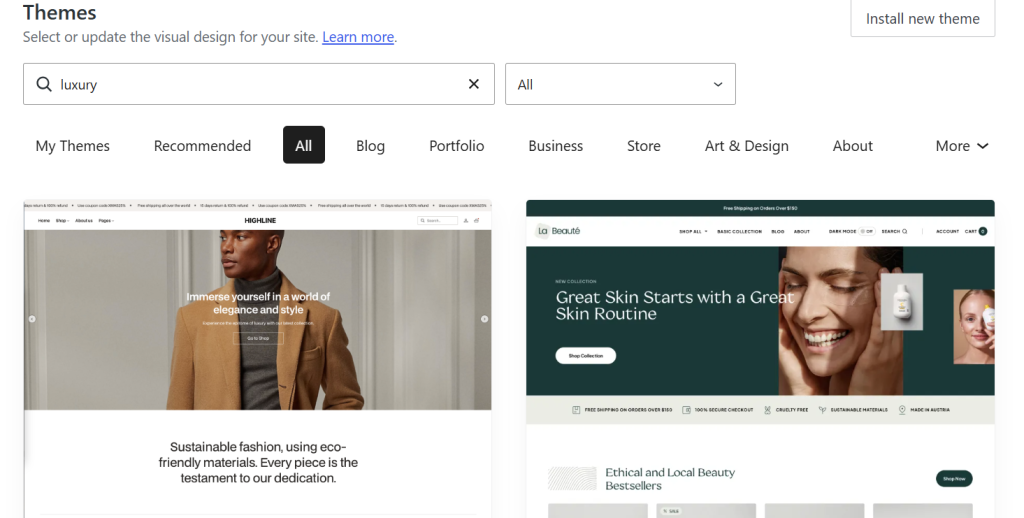
Sample luxury themes on WordPress.com
What you want to avoid are themes that feel busy or template-heavy. Luxury communicates through restraint. White space, sharp fonts, and dominant hero images do more for your brand positioning than any amount of widgets and sidebars.
Once you’ve installed your theme, go into the Site Editor and set your colour palette to something that feels premium. Deep navy, charcoal, ivory, and gold accents are the visual language of luxury. Avoid anything that looks bright or playful.
Structuring your content for brand deals
Before you pitch a single hotel, your blog needs to look like it has history. Publish at least six pieces before you approach anyone.
Write destination guides, packing lists for high-end travellers, or reviews of restaurants and experiences you’ve already paid for yourself. Brands want to see what your content looks like in the wild, not just a pitch deck.
Create a dedicated Press or Work With Me page on your site. List your metrics, your previous collaborations if you have any, and the kinds of partnerships you’re open to. This page does the pitching for you when a PR team lands on your site.
For spam management as your traffic grows, Akismet runs quietly in the background and keeps your comments section clean. A luxury travel blog with a spam-filled comments section undercuts everything else you’ve built.
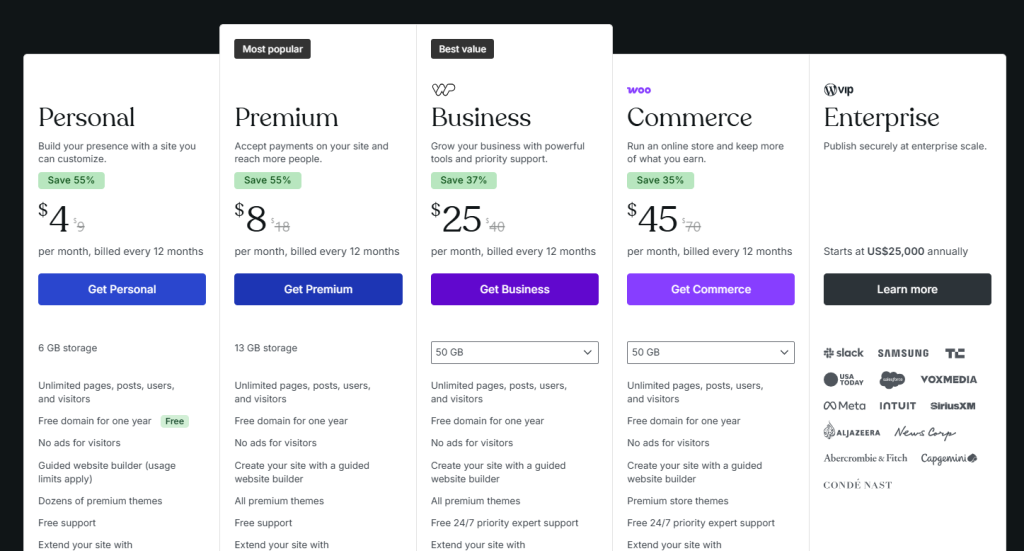
Current WordPress plans
The pitch that actually works
When I approached brands, I led with my content, not my follower count. I showed them what a well-written hotel review looked like on my blog and let the quality make the case. Find the PR contact for the property you want to review, keep your email short, link directly to your best piece, and be specific about what you’re proposing and when.
Most creators skip the specifics. Don’t. Brands move faster when the ask is clear.
Your WordPress blog is the foundation everything else sits on. The social following, the brand deals, the bylines, they all become easier to secure when there’s a body of work somewhere that speaks for you before you even open your mouth. Start building that body of work now, and be patient enough to let it compound.